We have been quiet for a while. If you have been following Northflow, you probably noticed. No feature announcements. No product updates. Just silence.
That was not an accident. We went heads-down on something we could not rush.
Today we are introducing Northflow Flux, a complete ground-up rebuild of the platform. New architecture, new interface, new foundation. Not a feature update. Not a visual refresh. A rebuild of everything underneath, designed for what podcast production is becoming.
I want to walk you through what we did, why we did it, and what it means for your agency.

Why we made the call to rebuild
Here is the honest version.
Northflow V1 worked. People were using it. The core ideas were right. But under the surface, we were hitting walls.
The platform was slow. Not "could be faster" slow. Frustratingly slow. Pages loading longer than they should. Drag-and-drop lagging. Actions that should resolve instantly taking a beat too long. When you are in a tool every day managing real production workloads, that friction adds up fast.
But speed was only the symptom. The real problem was structural.
V1 was built fast and it showed. The data models were not consistent enough for automated systems to query reliably. Workflow stages existed visually but did not mean anything at the system level. They were labels, not events. Every new feature we tried to add cost more than the last because we were fighting the architecture at every step.
We could have kept patching. We could have shipped incremental fixes and hoped the foundation would hold. But we looked at where AI and automation are heading, and we looked at what we wanted to build next, and we knew the honest answer: this foundation was not going to get us there.
So we stopped adding features and rebuilt from the ground up.
What actually changed in Flux
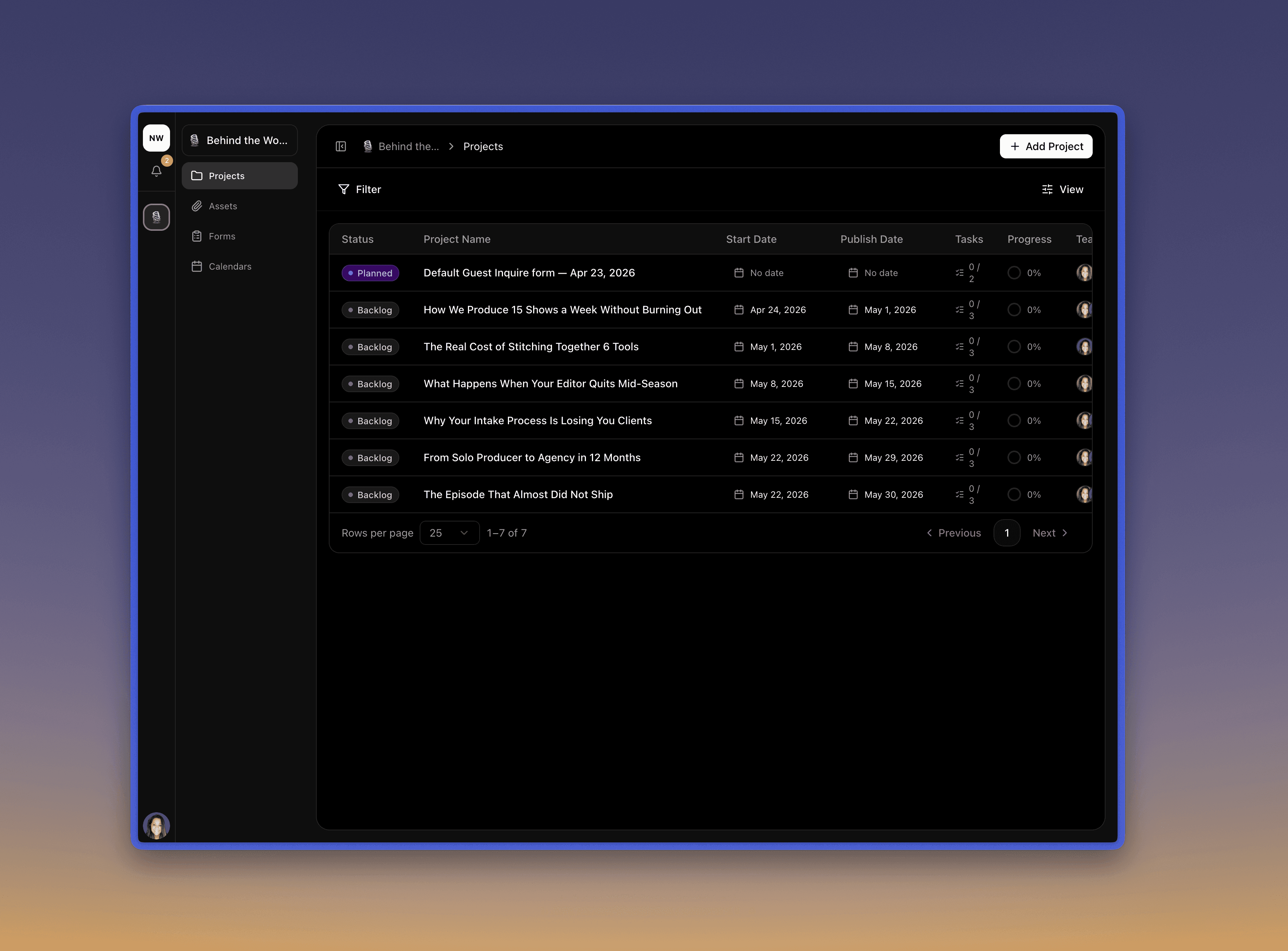
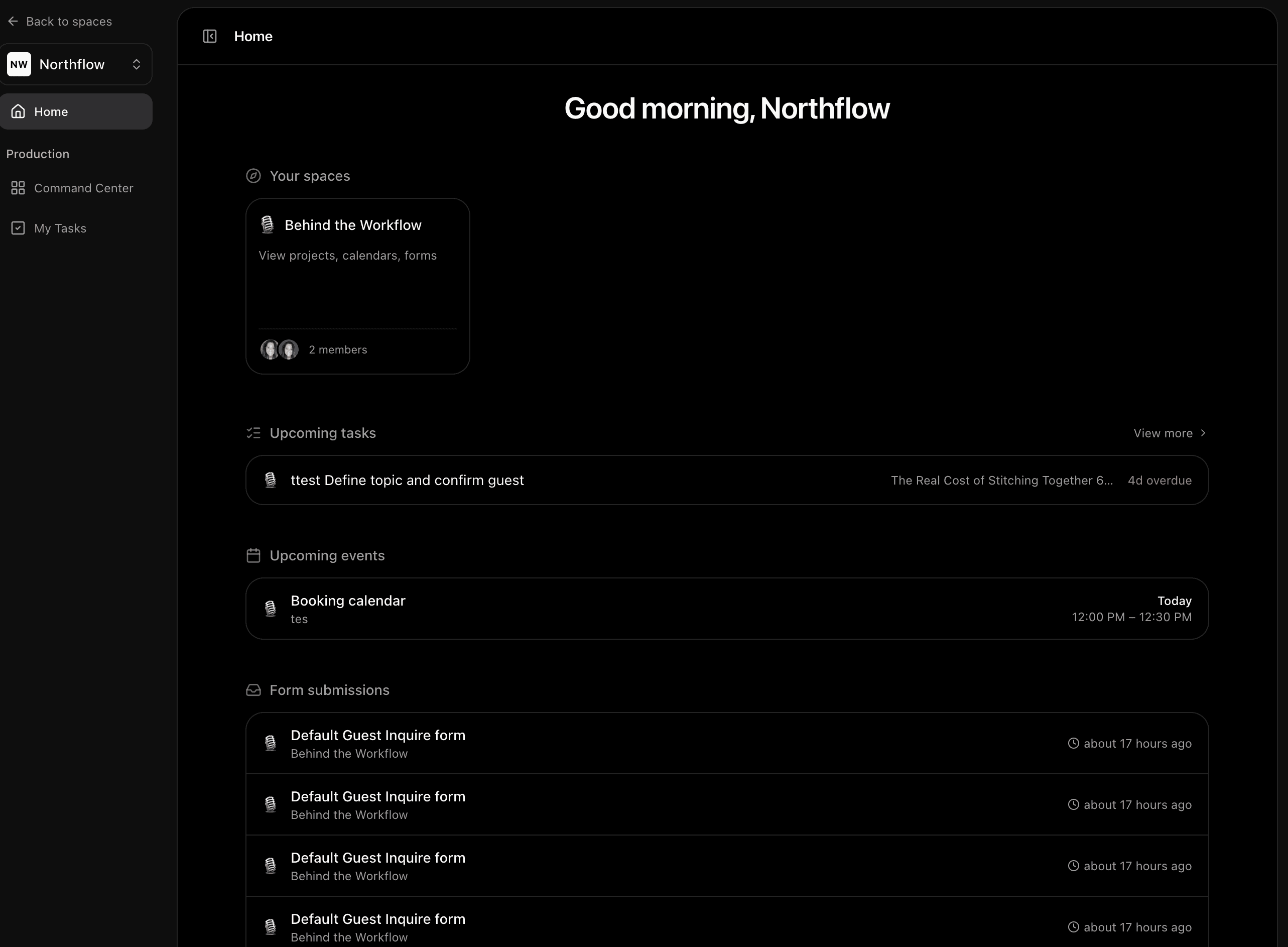
The part you will notice first is the interface. It is cleaner, faster, and reorganized around how production teams actually work. Dark mode is in there. Navigation is tighter. The sidebar is organized into four clear sections: Shows, Planning, Tasks, Assets.
But the interface is almost secondary to what we spent most of our time on. The real work was making the production system underneath structurally sound.
Episodes are true containers now. Everything that belongs to an episode, tasks, guests, assets, forms, notes, is connected to it in the data layer, not just visually. An automated system can read the full state of an episode in a single query and write changes back in a way the rest of the platform immediately understands.
Workflow stages are real state transitions. In V1, dragging an episode from pre-production to editing was a visual action. The column changed. Nothing else happened. In Flux, that same action is a system event. The platform registers what stage it came from, what stage it moved to, what is attached to the episode, and who owns the next step. Your pipeline now thinks in events, not just positions on a board.
Performance is a different experience. Pages load immediately. Switching between shows, episodes, and tasks feels instant. The Command Center, your calendar, kanban, and table views in one place, is significantly smoother. If you manage multiple shows, this is where you will feel the difference most.
The guest experience is cleaner. Guests never need to log into Northflow. They get a link, fill out their intake form, upload their assets, book their slot, and everything routes directly into the right episode automatically. For agencies coordinating dozens of guest relationships at once, that is a meaningful reduction in manual work.
What stayed the same
This matters just as much.
Your shows are there. Your episodes are there. Your tasks, guests, assets, forms, all of it moved into Flux exactly as it was. We did not migrate your data in a way that breaks how you set things up. You log in and it is your Northflow, running on a better foundation.
Your team setup is intact. Spaces, permissions, collaborators, same structure. Your content calendar is there. Your production pipeline has the same stages you defined. Your guest database is the same.
The goal was always to make Flux feel like a platform you already know. Just one that is ready for what you are going to ask it to do next.
What becomes possible now
This is the part we are most excited about.
The rebuild was never about shipping a prettier interface. It was about creating the structural foundation for everything we are building next.
Workflow automations are coming first. Step-based triggers tied to your production stages. When an episode moves to editing, a task gets assigned. When it moves to client review, the client gets notified. When it publishes, the guest gets a follow-up. None of this requires anyone to manage it manually. It runs based on how you have set up your pipeline.
Contact flows follow from there. Guided journeys for guests and clients. From booking through intake through prep through post-episode follow-up, without a single manual email. A guest says yes to your show and the flow takes it from there.
AI agents embedded in your workflow are the horizon we are building toward. Not a chatbot. Not a text generator. Agents that have full context on your shows, episodes, guests, and team. Agents that can surface what is at risk, follow up on what is overdue, and handle the operational layer of your agency without someone having to think about it.
None of this was possible to build properly on V1. All of it is possible now.
Who Flux is built for
If you are a solo podcaster managing one show, Flux makes your life easier. But we designed it with a specific user in mind: the podcast agency.
Agencies managing five, ten, twenty shows for multiple clients. Teams where the coordination tax is the biggest bottleneck. Operations where the difference between a system that tracks work and a system that moves work forward is the difference between scaling and burning out.
The Spaces structure lets you organize by client or by team. Eagle's View gives you a single dashboard across all your shows. Permissions keep things clean between clients. The episode-centric architecture means every show runs the same way, which is how you standardize production without losing flexibility.
If that sounds like the problem you are solving right now, Flux was built for you.
See it for yourself
We could keep describing it, but Flux is one of those things that makes more sense when you see it in action.
If you are running a podcast agency or managing production across multiple shows, book a walkthrough with our team. We will show you how Flux works with your specific workflow, how the episode-centric system handles your production pipeline, and what the automation roadmap looks like for your use case.